How to Bake Japanese Sweet Potatoes in the Oven (375°F Method)
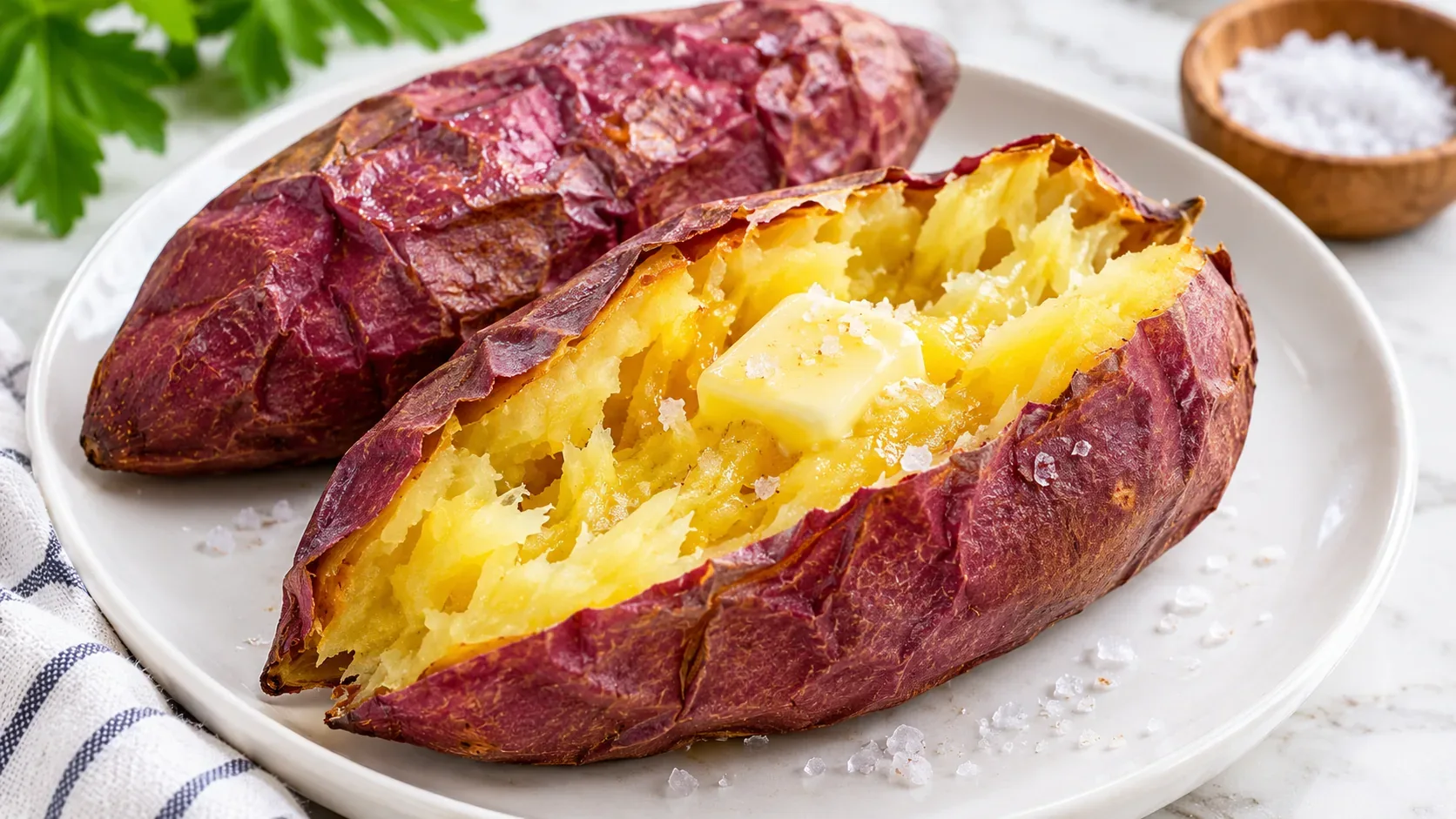
A Japanese sweet potato looks almost too simple to need a recipe, until you cut one open and find a firm center. Done well, the reddish-purple skin gives way to golden, fluffy flesh with a sweet, nutty flavor reminiscent of roasted chestnuts.
To bake Japanese sweet potatoes in the oven, scrub and pierce them, set them on a lined baking sheet, and bake whole at 375°F (190°C) for roughly 60–90 minutes, depending on thickness. They’re ready when a skewer slides easily into the widest part. Baking them unwrapped gives the skin a drier texture, while checking tenderness helps prevent undercooked centers.
Why Does This Baking Method Work?
Japanese sweet potatoes, often sold as Murasaki sweet potatoes in U.S. stores, generally have reddish-purple skins and pale flesh that turns cream or yellow when baked. They’re starchier and often less moist than orange-fleshed varieties. That isn’t a defect. It’s why the finished texture can be fluffy rather than soft and syrupy.
The 375°F (190°C) setting is a practical middle ground. Some yaki imo recipes use 325°F (163°C) for a longer, gentler bake; others roast at 425°F (218°C) for faster cooking and more pronounced skin browning. The middle temperature gives the center time to soften without requiring quite as long an oven session.
Leaving the potatoes uncovered lets moisture escape from the skin. A lined sheet catches sticky drips, and piercing gives steam a way out. No oil or sugar is necessary for the basic version.
What Ingredients Do You Need, and What Can You Substitute?
- 4 medium Japanese sweet potatoes, about 6–8 ounces (170–225 g) each. Choose firm potatoes of similar thickness so they finish around the same time.
- Optional toppings: A little salted butter, flaky salt, or cinnamon, added after baking.
That’s the entire ingredient list. Look for names such as Japanese sweet potato, satsumaimo, or Murasaki. The last is a common U.S. grocery label, although Japanese cultivar names aren’t always used consistently between markets.
Don’t automatically substitute Okinawan purple-fleshed sweet potatoes. They look different when sliced and may have different cooking and texture characteristics. Orange sweet potatoes can be baked using a similar technique, but their wetter flesh won’t give the same result.
Equipment: A rimmed baking sheet, parchment paper, a vegetable brush, and a thin skewer or paring knife. A kitchen scale is helpful if you’re comparing potatoes of different sizes, but thickness matters more than weight alone.
How Do You Bake Japanese Sweet Potatoes Step by Step?
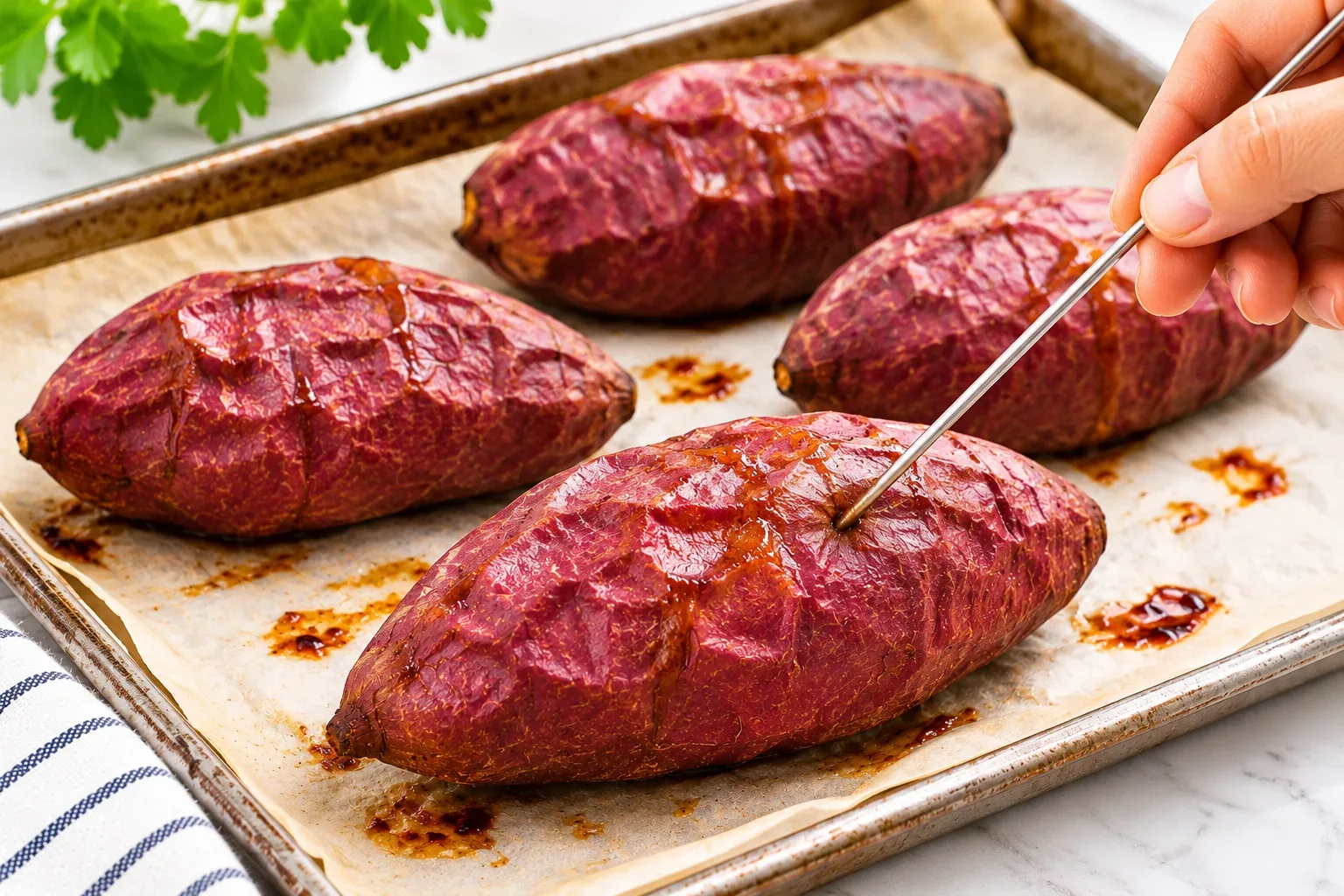
Bake the potatoes whole, then use a skewer to check the center.
Preheat and prepare. Heat the oven to 375°F (190°C). Line a rimmed baking sheet with parchment. Leave enough space for air to circulate around each potato.
Wash and dry. Scrub the skins under running water, paying attention to soil around the ends. Pat them dry. Leave the skins on because they hold the soft interior together and are edible after washing.
Pierce the skins. Use a fork to make several shallow holes around each potato. Place them directly on the lined sheet without wrapping them in foil or brushing them with oil.
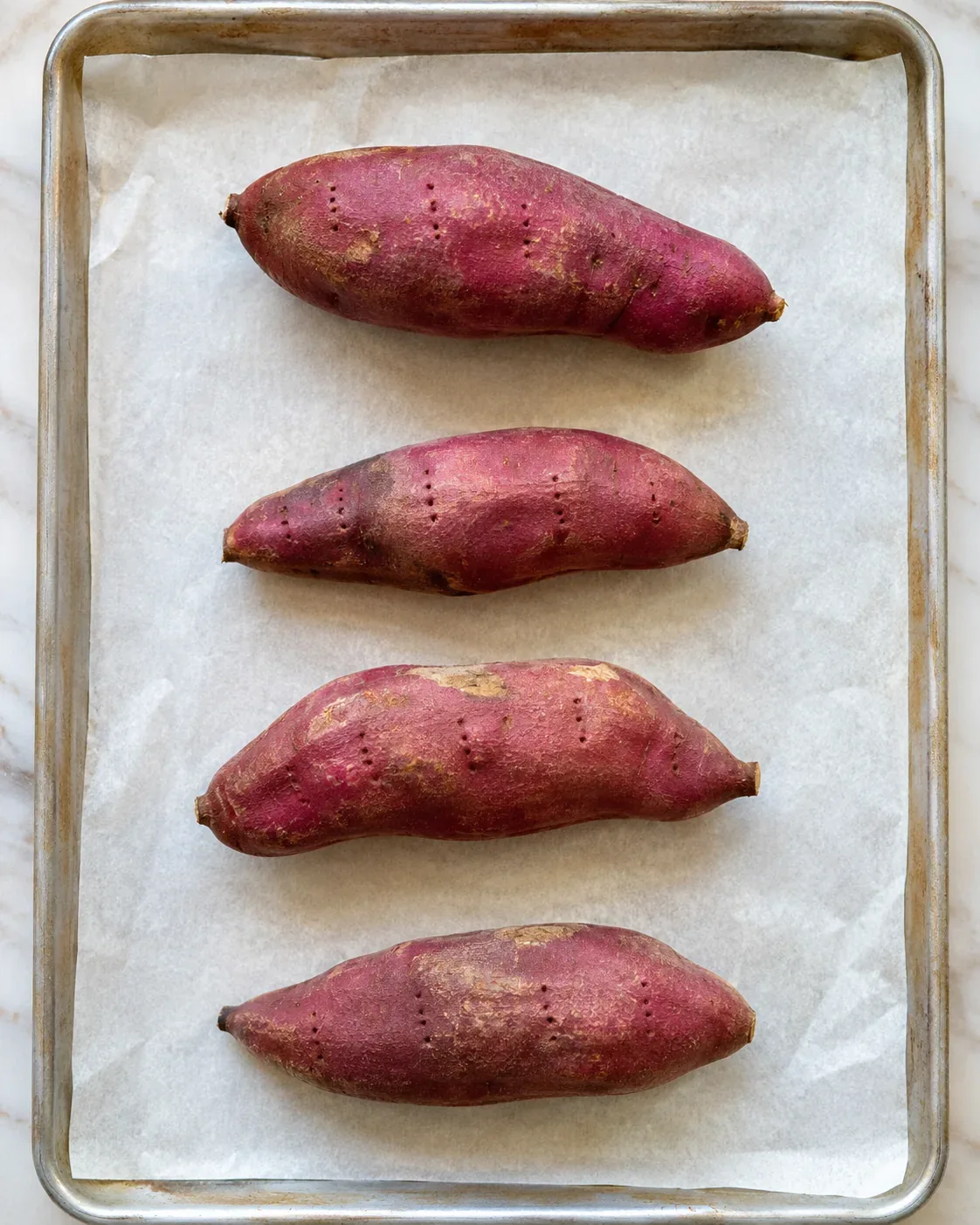
Bake and check. Bake for 60–90 minutes, checking smaller potatoes first. The skin may wrinkle, separate slightly from the flesh, or develop a few dark spots. Insert a thin skewer through the thickest section. It should pass into the center with little resistance. If it catches on a firm core, bake another 10 minutes and test again.
Rest and serve. Let the potatoes stand for about 5 minutes, then slit each lengthwise. Gently open the halves with a fork to reveal the pale-gold interior. Add a little butter or salt if desired.
How Long Should Japanese Sweet Potatoes Bake by Size?
Use these as checkpoints, not guarantees:
| Potato Thickness | Approximate Time at 375°F |
|---|---|
| Small and narrow | 45–60 minutes |
| Medium | 60–80 minutes |
| Large or thick | 80–100 minutes or longer |
An unusually thick potato can need more time than a heavier but slender one. If baking several sizes together, remove the tender ones first instead of leaving them all in until the largest is ready.
What Can Go Wrong With Baked Japanese Sweet Potatoes?
- Hard center: The potato is usually underbaked, particularly at its widest point. Return it to the oven for 10–15 minutes and test again. A browned skin alone doesn’t prove the middle is tender.
- Dry or crumbly flesh: Japanese varieties naturally run starchier than orange sweet potatoes, but excessive baking can make them mealy. Check sooner next time and serve with a small pat of butter if you prefer a softer bite.
- Burned or sticky bottom: Some potatoes leak sugary juices as they cook. Use parchment, keep the sheet near the middle of the oven, and don’t mistake a little caramelized syrup for a problem with the potato itself.
- Uneven cooking: Different thicknesses and crowded pans lead to different finishing times. Choose similar-sized potatoes, leave space around them, and rotate the baking sheet if your oven has noticeable hot spots.
What Should You Serve With Japanese Sweet Potatoes?
Try the first bite plain. Their sweetness and chestnut-like flavor are easier to notice before adding anything rich. For a savory side, try salted butter, a little miso butter, or black pepper. For a breakfast-style serving, cinnamon and plain yogurt work well.
They can also accompany roasted vegetables, grilled chicken, or a simple bowl of soup.
For a more substantial sweet potato dinner, try our Hot Honey Beef & Cottage Cheese Sweet Potato Boats or Ground Turkey Sweet Potato Bowl with Hot Honey.
For another breakfast idea, explore our Sweet Potato Crust Egg Bake.
These related recipes use sweet potatoes in other ways; their preparation times shouldn’t replace the whole-potato method here.
How Do You Store, Freeze, and Reheat Them?
Raw potatoes: Keep unwashed Japanese sweet potatoes in a cool, dark, dry, ventilated place, not the refrigerator. Cold storage can affect their quality. Discard potatoes with extensive soft spots or signs of spoilage.
Refrigerator: Let baked potatoes stop steaming, then refrigerate in a shallow covered container within 2 hours of cooking, or 1 hour if the surrounding temperature exceeds 90°F (32°C). Keep the refrigerator at 40°F (4°C) or below and use within 3–4 days.
Freezer: Wrap cooled, baked potatoes individually or portion the flesh into freezer-safe containers. Freeze at 0°F (−18°C) and aim to use within 2–3 months for best quality. Thaw overnight in the refrigerator; the flesh may be softer after freezing.
Reheating: Place whole potatoes on a tray in a 350°F (177°C) oven until hot throughout, roughly 15–25 minutes depending on size and starting temperature. For a faster option, split and microwave in short intervals. Reheat leftovers to 165°F (74°C) when checked in the center. If you used foil, remove it before chilling or reheating.
Frequently Asked Questions
Can you eat the skin of a Japanese sweet potato?
Yes. The skin is edible when the potato is properly washed and cooked. Unwrapped baking gives it a slightly drier texture; peel it away after cooking if you prefer only the flesh.
Are Japanese sweet potatoes purple inside?
The commonly sold reddish-purple-skinned Japanese and Murasaki types usually have cream-colored raw flesh that becomes yellowish when baked. Purple-fleshed Okinawan sweet potatoes are a different type, so check the label rather than assuming every purple-skinned potato looks alike inside.
Should you wrap Japanese sweet potatoes in foil?
You can, but foil traps steam and softens the skin. Baking them uncovered is preferable if you like a drier exterior. Foil is an option for softer skin, but the cooking time and texture can shift.
Are they sweeter than regular orange sweet potatoes?
They often taste sweeter and nuttier, with a chestnut-like character, but sweetness depends on the variety, storage, and baking method. Their lower-moisture texture can also make them feel denser than orange sweet potatoes.
Can you make baked Japanese sweet potatoes ahead?
Yes. Bake them, refrigerate within the recommended time, and reheat when needed. For a better skin texture, use the oven rather than steaming them in the microwave for too long.
How to Bake Japanese Sweet Potatoes in the Oven (375°F Method)
Learn how to bake whole Japanese sweet potatoes at 375°F with timing by size, a skewer doneness test, and tips for sweet, fluffy golden centers.
Ingredients
- 4 medium Japanese sweet potatoes, about 6–8 ounces (170–225 g) each
- to serve salted butter or flaky salt (optional)
Instructions
- Preheat
Heat the oven to 375°F (190°C) and line a rimmed baking sheet with parchment.
- Prepare
Scrub the potatoes, dry thoroughly, and prick each several times with a fork.
- Arrange
Place whole, unwrapped potatoes on the sheet, leaving space between them.
- Bake
Cook for approximately 75 minutes, checking the thickest part with a skewer. Actual baking time may range from 60–90 minutes or longer for very thick potatoes. Continue in 10-minute increments until tender.
- Rest and serve
Let stand for 5 minutes, split lengthwise, and serve with optional toppings.
Estimated Nutrition
Per one whole potato, approximately 200 g raw edible weight
- Calories
- 172 kcal
- Protein
- 3.1 g
- Total fat
- 0.1 g
- Total carbohydrates
- 40.2 g
- Fiber
- 6.0 g
- Net carbohydrates
- 34.2 g
Calculated estimates using the general USDA raw sweet potato reference, not Japanese-cultivar-specific laboratory data. Optional toppings are excluded.
Related Recipes
How to Roast Pumpkin Seeds in the Oven
Fresh whole pumpkin seeds roasted with olive oil and salt for a crisp fall snack.
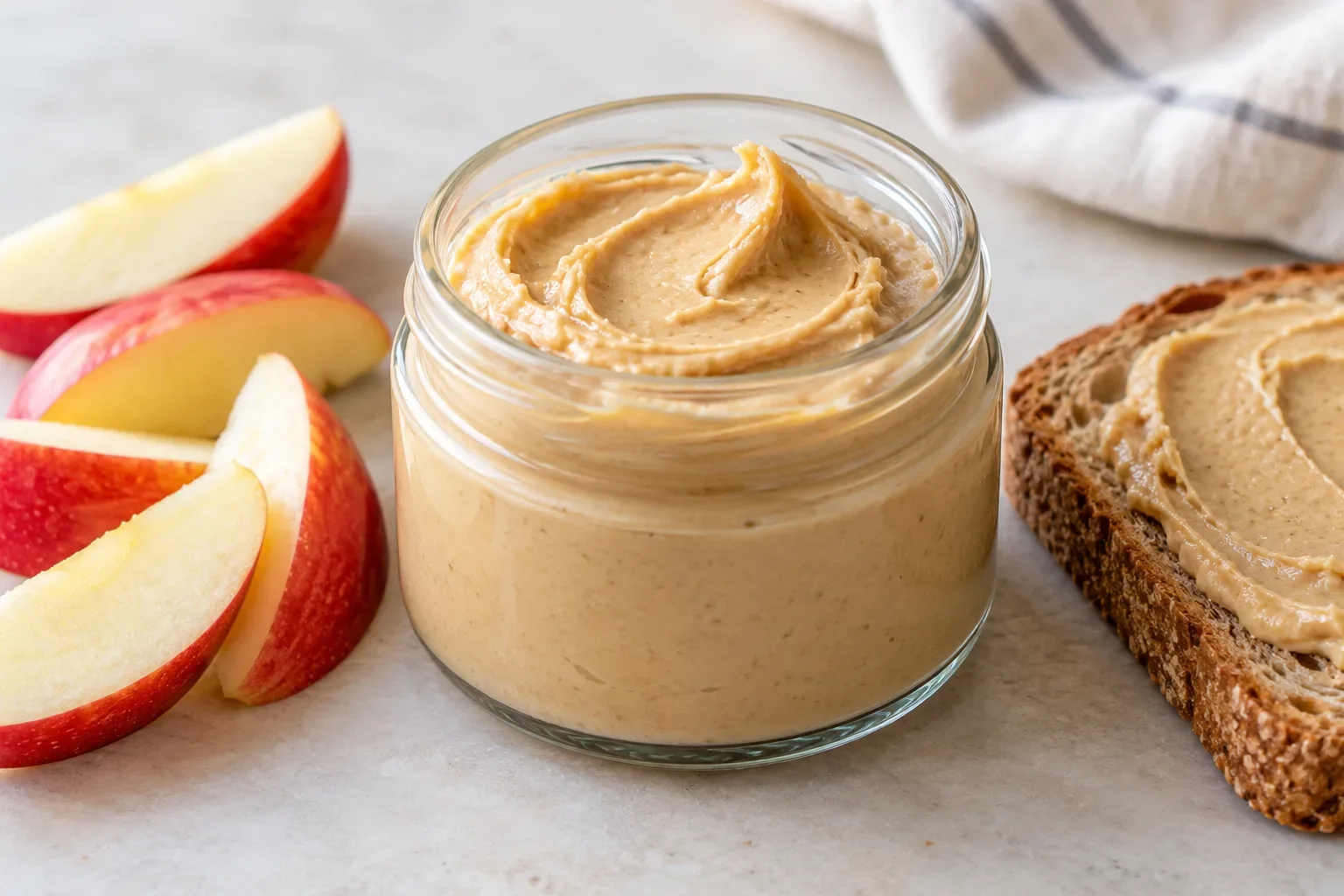
Beanut Butter Recipe: The Viral Bean-Based Spread
A creamy white-bean and powdered-peanut spread for toast, apples, and oatmeal.
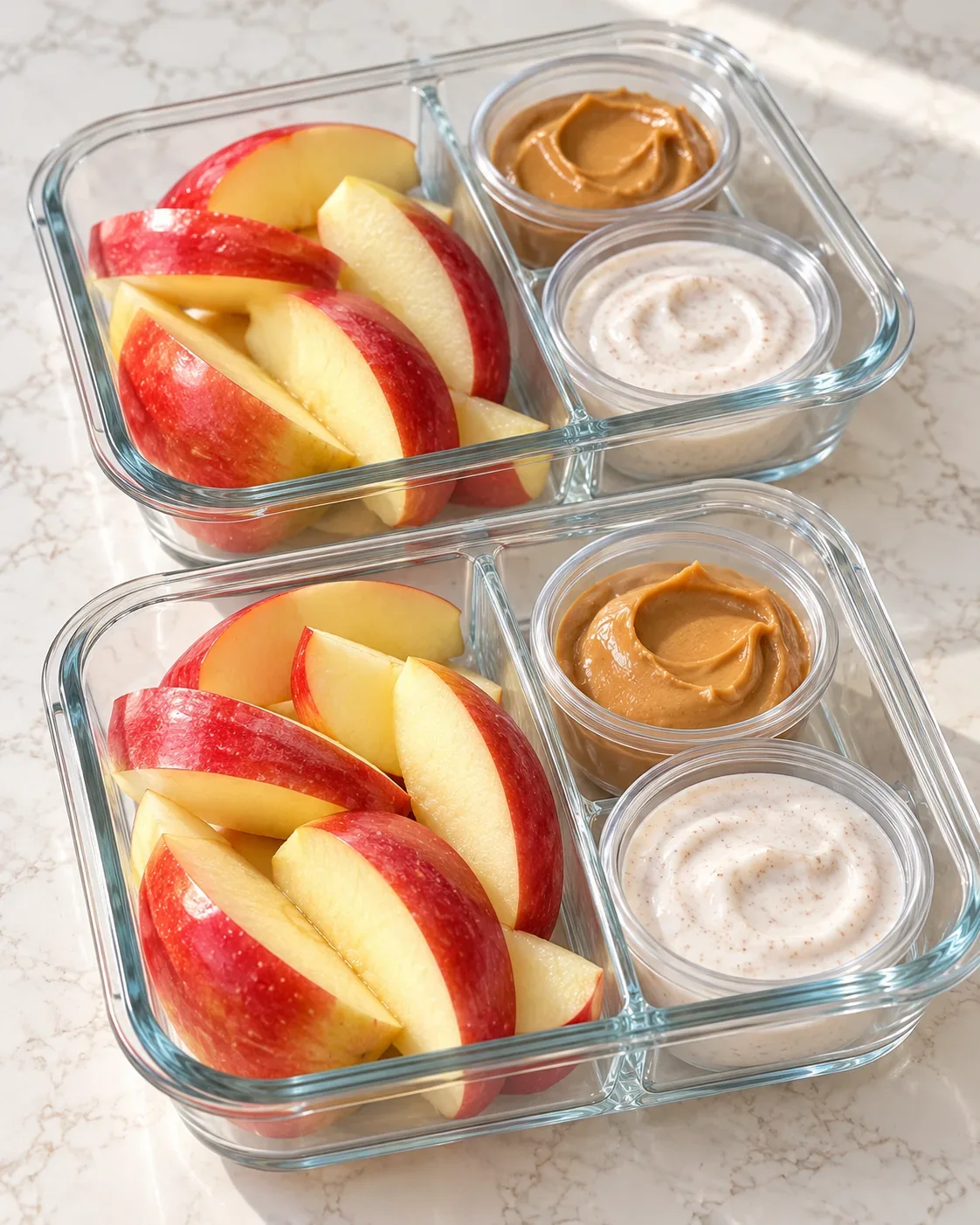
Apple Peanut Butter Snack Boxes with Cinnamon Yogurt Dip
Apple slices, a separate spoonful of peanut butter, and cinnamon yogurt dip packed into two chilled snack boxes.