White Chicken Lasagna Soup with Cottage Cheese
Shredded chicken, tender lasagna noodles, and spinach fill a garlicky broth made creamy with blended cottage cheese, milk, and Parmesan. This white chicken lasagna soup brings familiar lasagna flavors to the stovetop, with cooked chicken helping keep preparation straightforward.
The noodles cook in the broth, while the cottage cheese is blended separately and stirred in near the end. Keep a little extra broth nearby: the pasta continues to absorb liquid as the soup sits.
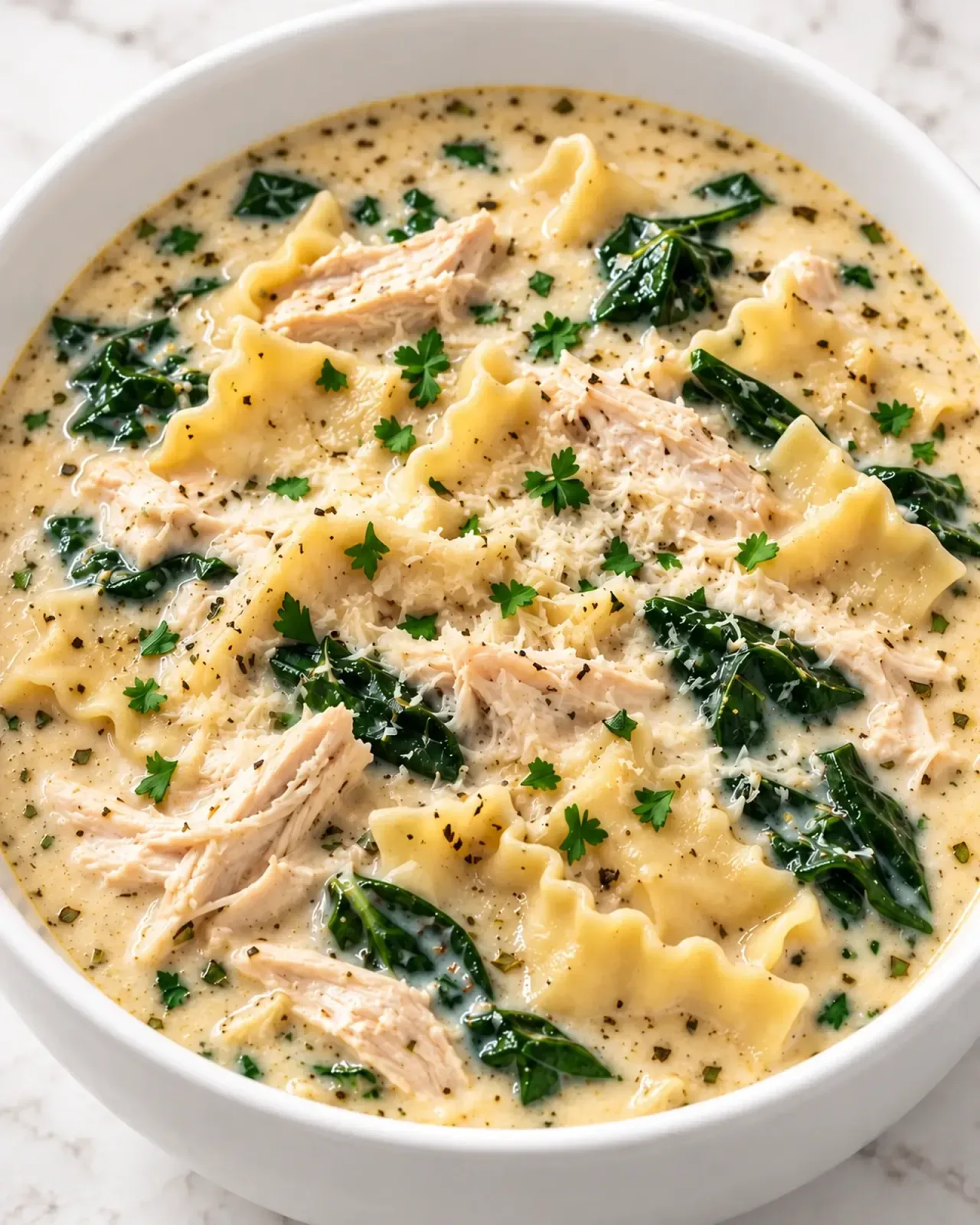
Why Use Cottage Cheese in Lasagna Soup
Cottage cheese contributes protein, creamy body, and a mild tang. Blending it first gives the broth a smoother starting texture, while Parmesan adds a deeper savory flavor.
Here, cottage cheese works with milk and a small cornstarch slurry to build the broth’s consistency. The result is meant to be a spoonable soup with distinct chicken and noodle pieces. Cottage cheese alone is not an equivalent replacement for every white sauce used in baked lasagna.
Ingredients and Helpful Notes
The complete amounts are in the recipe card below. A few details make preparation easier.
Cooked chicken: Use 1 pound of cooked, skinless edible meat, shredded or cut into small pieces. That is approximately 3 cups, depending on how tightly you fill the cup. Rotisserie chicken works; remove the skin and bones before measuring. The recipe’s timing assumes the chicken is already cooked.
Cottage cheese: Start with 4% milkfat cottage cheese. Blend it with some of the milk until no visible curds remain. A 2% version is a possible swap, though it will contribute less richness.
Lasagna noodles: Use regular dried noodles that require boiling. Weigh out 6 ounces before breaking them into pieces about 1–1½ inches wide. Sheet sizes vary, so weight is more useful than a fixed noodle count. Oven-ready sheets cook differently and are not the default for this recipe.
Milk and cornstarch: Divide the milk between the cottage cheese mixture and the cornstarch slurry. Whisk the starch into cold milk, then simmer that mixture in the soup before adding cottage cheese.
Parmesan: Finely grate it from a wedge when possible. The recipe uses about 30 grams; loosely measured volume can vary with the grater. Stir it in gradually.
Broth and seasoning: Low-sodium chicken broth gives you more control over salt. Cottage cheese, Parmesan, and seasoned chicken already contribute salt, so taste the finished soup before adding more.
Spinach: Roughly chop baby spinach so the leaves are easy to eat with a spoon. Onion, garlic, Italian seasoning, and black pepper round out the savory base.
Simple Substitutions
Cooked turkey can replace the chicken in the same cooked weight. Small pasta shapes such as mafalda or campanelle can replace the broken lasagna noodles; use the same dry weight and follow their package cooking guidance.
Whole-wheat or gluten-free noodles may need different cooking times and broth adjustments. For a gluten-free adaptation, check the broth and all other ingredients as well as the pasta. These substitutions change the standard recipe’s nutrition and cooking behavior.
How to Make White Chicken Lasagna Soup
Blend the cottage cheese with ½ cup of the milk until smooth, stopping to scrape down the sides as needed. In a small bowl, whisk the remaining ½ cup cold milk with the cornstarch.
Blend the Cottage Cheese
This keeps hot soup out of the blender and gives you two mixtures ready for their different stages of cooking.
Soften the Onion and Add the Garlic
Heat the olive oil in a large soup pot over medium heat. Cook the diced onion for about 5–6 minutes, stirring occasionally, until softened. Add the garlic, Italian seasoning, and black pepper. Stir for about 30 seconds, just until fragrant.
Simmer the Noodles
Pour in 5 cups of broth and bring it to a boil. Add the broken noodles and stir immediately to separate the pieces. Reduce the heat to a steady simmer and stir frequently, including across the bottom of the pot.
Use the package’s al dente time as a starting guide. Move to the next step when the noodles are about 2 minutes short of that time. Taste a piece to check; it should still have some firmness in the center.
Add the Chicken and Thicken the Broth
Stir in the cooked chicken. Whisk the milk-cornstarch mixture again, then stir it into the simmering soup. Cook for about 2–3 minutes, or longer as needed, until the noodles are tender, the broth thickens slightly, and reheated chicken reaches 165°F (74°C).
Add the spinach and stir until wilted, about 1 minute. Add some reserved broth if the noodles need more liquid.
Stir in the Cottage Cheese and Parmesan
Turn the heat down so active bubbling stops. Gradually stir in the blended cottage cheese, followed by the Parmesan in small additions.
Warm gently while stirring. If the soup is thicker than you want, add extra broth a little at a time. Heat the finished soup to 165°F (74°C), then taste and adjust the salt. Serve promptly, with chopped parsley if using.

Keeping the Broth Smooth and the Noodles Tender
Check the blender mixture before adding it. Visible curds in the blended cottage cheese will also be noticeable in the broth. Scrape down the blender and continue blending if needed.
Cook the starch before finishing with cheese. The slurry needs a brief simmer to thicken. Complete that step while the cottage cheese is still outside the pot.
Use gentle heat for the dairy finish. Once the cottage cheese is added, stir and warm the soup without a prolonged boil. Dairy texture can vary by brand, and very high heat can make it grainy or separate.
Keep broth available. The soup thickens as noodles absorb liquid. Add broth gradually so you can judge the consistency, then warm the soup after each addition.
Taste before salting. Broth, chicken, cottage cheese, and Parmesan vary in saltiness. Start with a small addition only if the finished soup needs it.
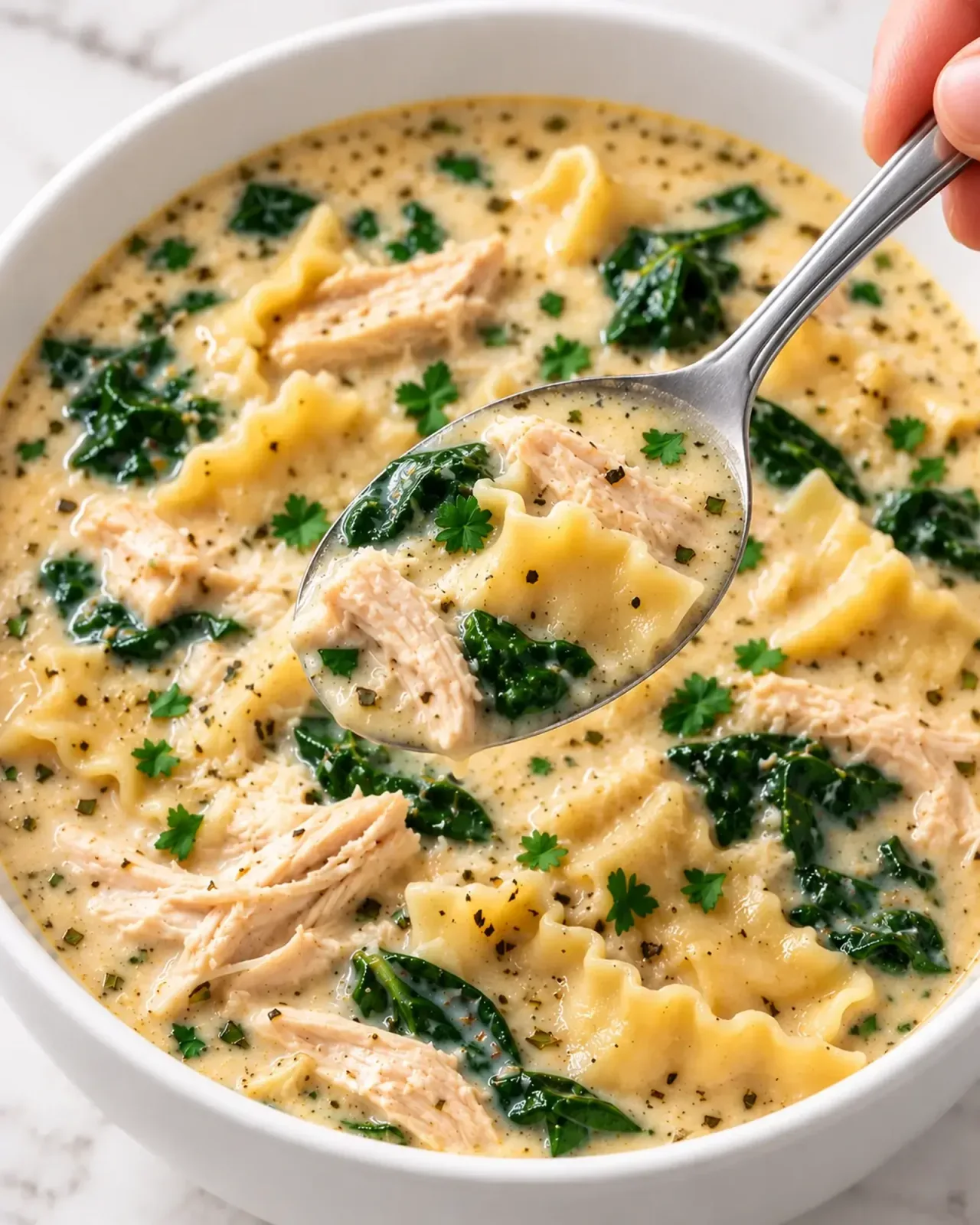
What to Serve With It
A simple green salad adds a fresh side to the creamy soup. Roasted vegetable sheet pan mix is another option, especially when you want vegetables with browned edges.
Bread or toast works for dipping. Side dishes are separate from the soup recipe and its serving yield.
Make Ahead, Storage, and Reheating
For noodles that keep their shape better, cook them separately and add them to individual bowls when serving. This uses another pot, and the broth will need less adjustment for pasta absorption. Judge the thickness before adding extra liquid.
Making It Ahead
If you make the standard version with noodles cooked in the soup, expect it to be thicker the next day. Loosen each reheated portion with a little broth.
Refrigerating Leftovers
Divide leftovers into small, shallow containers and refrigerate promptly, within 2 hours of cooking. If the food is exposed to temperatures above 90°F (32°C), refrigerate within 1 hour. Keep the refrigerator at 40°F (4°C) or below; there is no need to wait for the soup to reach room temperature.
Use refrigerated soup within 3–4 days. If you started with previously refrigerated chicken, account for the time it had already been stored.
Reheating
For an individual portion, add a little broth if needed and microwave in a covered, vented microwave-safe container. Stir during heating, allow standing time, and check several places with a food thermometer. Reheat to at least 165°F (74°C).
For stovetop reheating, USDA recommends bringing soups to a rolling boil. Stir frequently and remove from the heat once safely reheated. The dairy may change texture; avoiding an extended boil can limit further separation.
Freezing
For better texture, freeze the chicken-and-broth base before adding noodles, milk, cornstarch, cottage cheese, and Parmesan. Refrigerate or freeze promptly in shallow portions, and use the frozen base within 2–3 months for quality.
Thaw in the refrigerator, reheat the base safely, then cook fresh noodles and complete the dairy steps. The finished soup can soften or separate after freezing, so its original texture is not assured.
More Cottage Cheese Dinner Recipes
For another creamy dinner idea, try cottage cheese Alfredo sauce.
For a baked dish with familiar lasagna flavors, see cottage cheese zucchini lasagna.
Estimated Nutrition per Serving
Per serving (one-sixth of the recipe): approximately 395 calories, 40 g protein, 32 g carbohydrates, 11 g fat, 1.8 g fiber, 3.7 g saturated fat, and 430 mg sodium.
These are estimated values under the modeled ingredients, not lab measurements. The calculation uses 454 g already cooked, unbrined skinless chicken breast, 4% milkfat cottage cheese, 2% milk, and the specified low-sodium broth. Different brands and preparation can change the results, especially sodium. Optional additional broth, salt to taste, and parsley are excluded.
White Chicken Lasagna Soup with Cottage Cheese
Make white chicken lasagna soup with cottage cheese, shredded chicken, spinach, and tender noodles, plus practical tips for a smooth broth and leftovers.
Ingredients
- 1 tablespoon olive oil
- 1 medium yellow onion, finely diced, about 1 cup (150 g)
- 4 garlic cloves, minced
- 1 1/2 teaspoons Italian seasoning
- 1/2 teaspoon black pepper
- 5 cups low-sodium chicken broth (1.18 L), plus up to 1 cup (240 mL) as needed
- 6 ounces regular dried lasagna noodles (170 g), broken into 1–1½-inch pieces
- 1 pound cooked skinless chicken (454 g), shredded or cut small, approximately 3 cups
- 2 cups 4% milkfat cottage cheese (about 450 g)
- 1 cup 2% milk (240 mL), divided
- 1 tablespoon cornstarch (about 8 g)
- 4 ounces baby spinach (113 g), roughly chopped
- 30 g freshly finely grated Parmesan, approximately ½ cup loosely measured
- salt, to taste
- 2 tablespoons chopped fresh parsley (optional)
Instructions
Blend the cottage cheese with ½ cup milk until smooth, scraping down the blender as needed. In a small bowl, whisk the remaining ½ cup cold milk with the cornstarch.
Heat the olive oil in a large soup pot over medium heat. Add the onion and cook, stirring occasionally, for about 5–6 minutes, until softened. Stir in garlic, Italian seasoning, and black pepper; cook about 30 seconds.
Add 5 cups broth and bring to a boil. Stir in the broken noodles, then reduce to a steady simmer. Stir frequently to separate the noodles and prevent sticking. Cook until about 2 minutes short of the package’s al dente time, tasting a piece to check.
Stir in the cooked chicken. Whisk the milk-cornstarch mixture again and stir it into the simmering soup. Cook about 2–3 minutes, or longer as needed, until the noodles are tender, the broth thickens slightly, and reheated chicken reaches 165°F (74°C). Stir in spinach until wilted, about 1 minute. Add reserved broth if needed.
Reduce the heat so active bubbling stops. Gradually stir in the blended cottage cheese, then the Parmesan in small additions. Warm gently while stirring, avoiding a prolonged boil.
Add extra broth gradually if needed for a spoonable consistency. Heat the finished soup to 165°F (74°C). Taste before adding salt; add it in small increments if needed. Serve promptly with optional parsley.
Recipe Tip
Chicken is measured after cooking, with skin and bones removed. Cooking raw chicken is not included in the estimated timing.
Regular boil-required lasagna noodles are the default. Noodle brands and shapes vary in cooking time and liquid absorption.
Refrigerate promptly in shallow containers and use within 3–4 days, accounting for any earlier chicken storage. Reheat portions to 165°F (74°C).
Timings and yield are estimates for this research-developed recipe.
Related Recipes
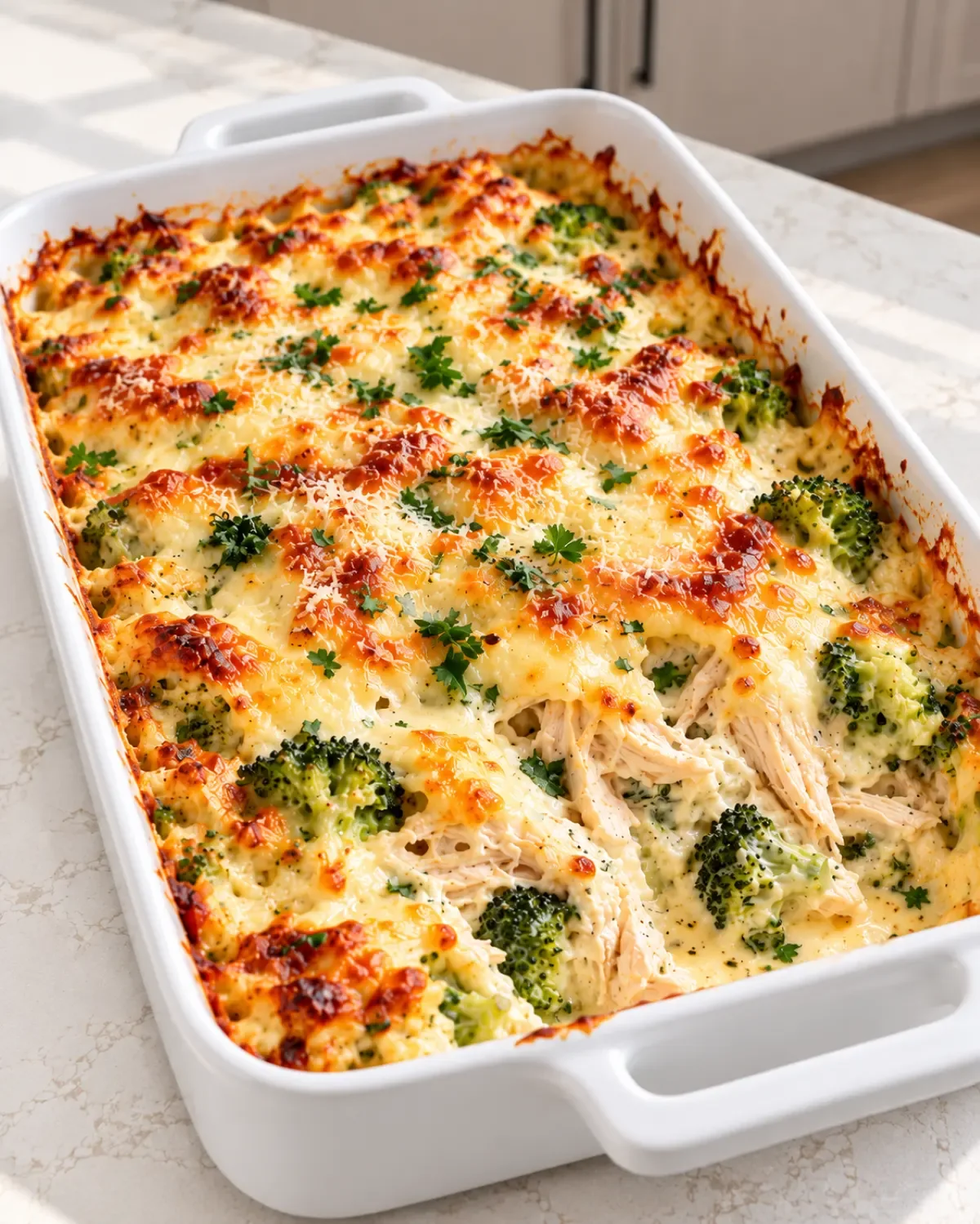
High Protein Cottage Cheese Chicken Bake with Broccoli
Make this creamy high protein chicken bake with shredded chicken, broccoli, cottage cheese, Parmesan, and mozzarella. It bakes at 375°F in 25–30 minutes.

Cottage Cheese Pizza Base
A simple cottage cheese pizza base made with cottage cheese, eggs, and flour, topped with pesto, mozzarella, cherry tomatoes, and fresh basil.

Hot Honey Beef & Cottage Cheese Sweet Potato Boats
Baked sweet potatoes filled with seasoned lean ground beef, cottage cheese, avocado, and a drizzle of hot honey.