How to Keep Thanksgiving Gravy Warm Without Using the Stove
Published
Thanksgiving dinner has a way of filling every burner just when you need more room. Move freshly cooked gravy to a small slow cooker or an electric warmer that can hold it hot. An insulated food container can help with a short trip to the table or another home, but it does not add heat. Check the gravy itself with a food thermometer: hot gravy should stay at 140°F (60°C) or above. If you made it ahead, reheat it before moving it to a warmer. Here is how to choose equipment, handle a trip, and keep the gravy smooth through dinner.
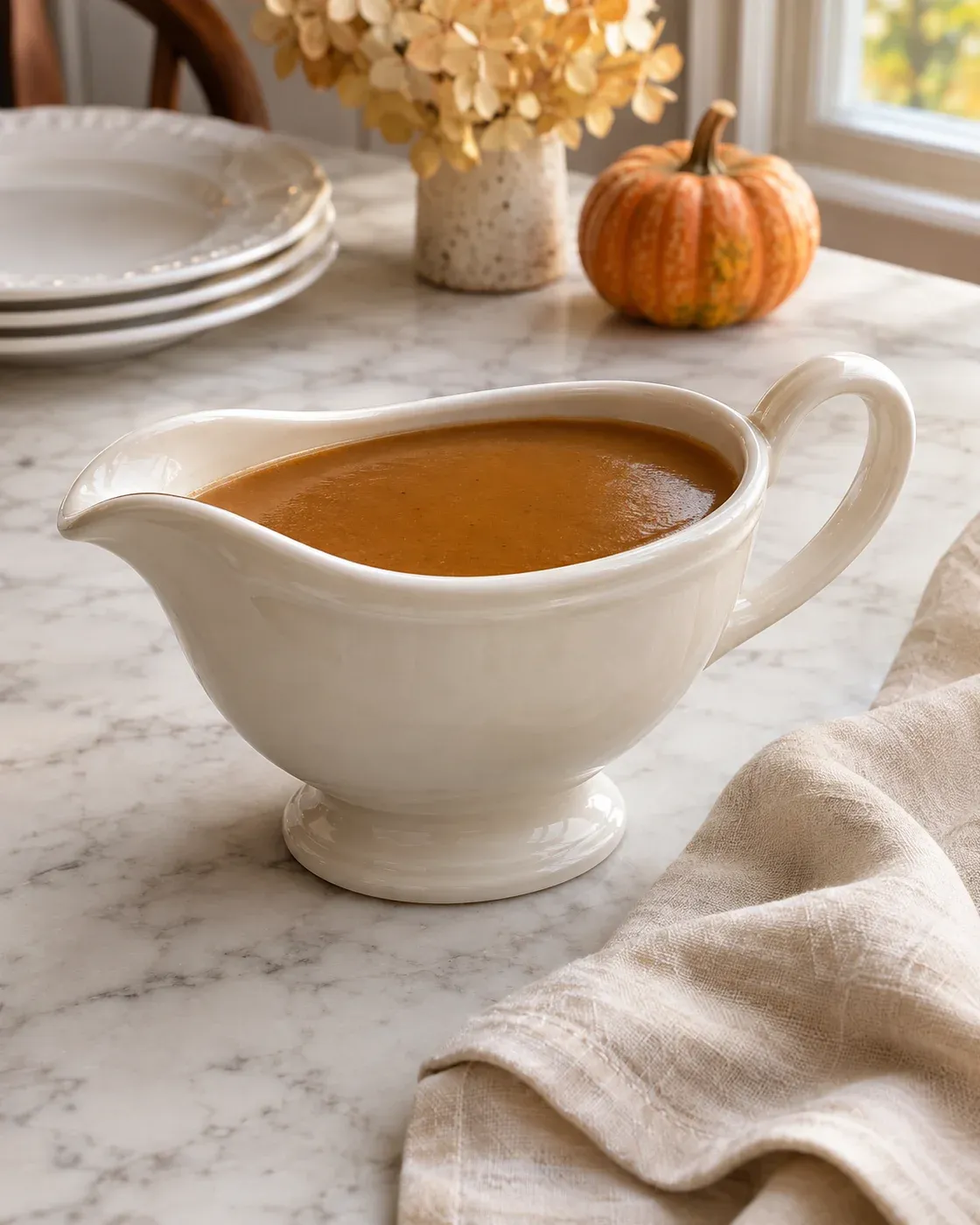
Which Way of Keeping Gravy Warm Fits Your Dinner?
| Method | Best use | Check before serving |
|---|---|---|
| Small slow cooker | A main batch for a family meal or buffet | The gravy stays at 140°F (60°C) or above, even after the lid has been opened. |
| Electric gravy boat or warming tray | A smaller amount near the table | The appliance and dish are compatible, and the gravy stays at 140°F (60°C) or above. |
| Insulated food container | A short transfer without an outlet | The container is made for hot food, closes securely, and the gravy is still at 140°F (60°C) or above when checked. |
These are holding methods for gravy that is already hot. An appliance’s warm setting does not tell you the temperature of the food. Check the gravy with a clean thermometer, particularly when serving takes longer than expected. FoodSafety.gov’s hot-holding guidance recommends holding cooked food at 140°F (60°C) or above.
How Do You Hold Fresh Gravy in a Slow Cooker?
Set a small slow cooker on a stable, heat-safe surface. Check its instructions for preheating and minimum fill levels while you finish the gravy.
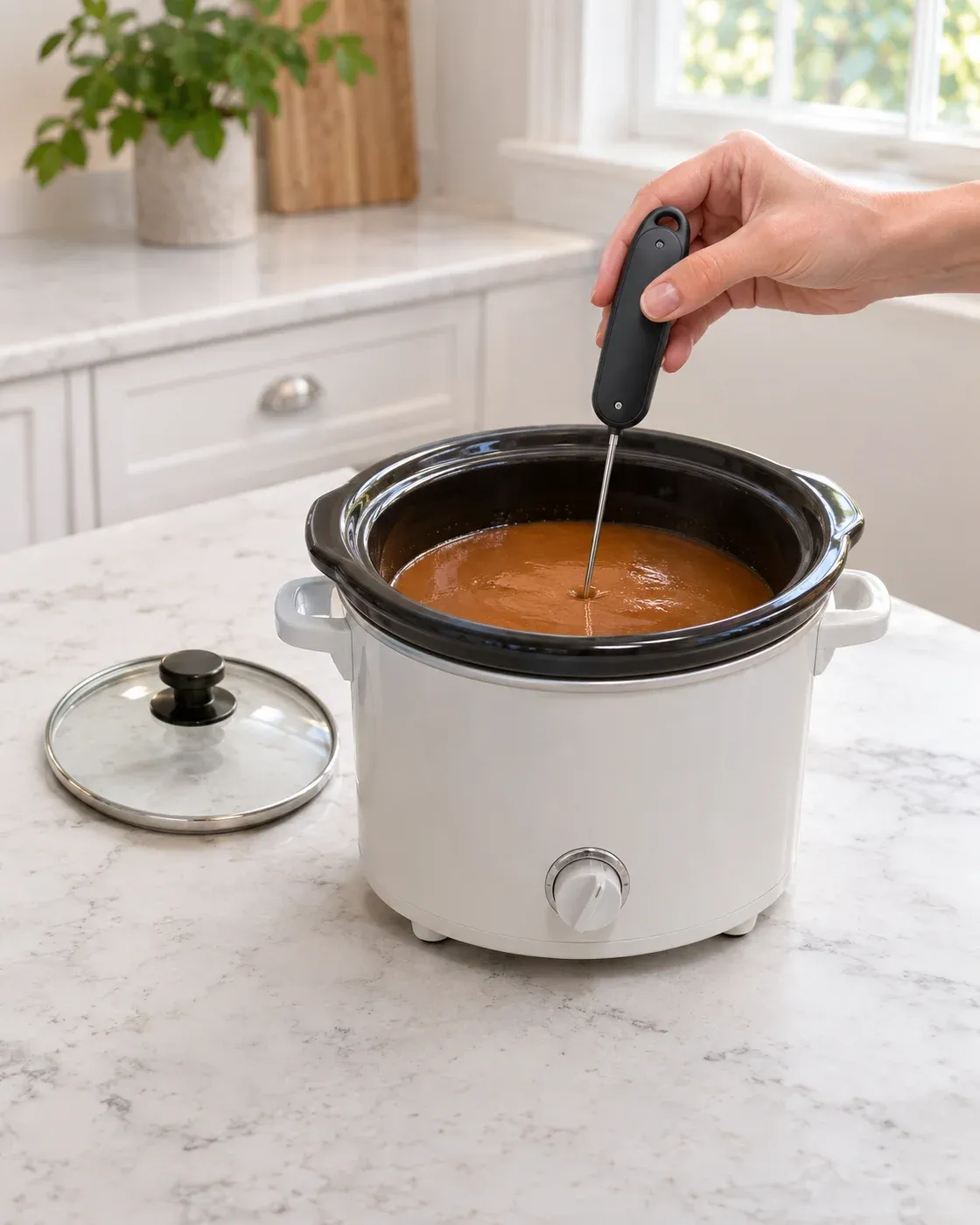
- Pour the fully cooked, hot gravy into the cooker. Cover it and select the setting intended to hold cooked food warm.
- Stir, then check the gravy with a food thermometer without resting the probe against the pot. Check more than one spot if needed.
- Keep the lid on between servings. Stir and check the temperature during the meal, especially if guests open the cooker often.
If the gravy thickens, whisk in a little warm broth or water and check its temperature again. Do not use the warm setting to reheat cold gravy. FoodSafety.gov’s reheating guidance calls for reheating cooked-ahead food before hot holding.
An electric gravy boat or warming tray can work for a smaller portion. Use a heat-safe dish approved for that appliance and verify the gravy’s temperature. Some devices make food feel pleasantly warm without keeping it hot enough for safe holding.
Can You Make Gravy the Day Before?
Yes. Divide cooked gravy among shallow containers and refrigerate it promptly at 40°F (4°C) or below. You do not need to leave it on the counter until it reaches room temperature. FoodSafety.gov advises eating or freezing leftovers within four days, so a day-before batch falls within that window when stored properly.
When it is time to serve, reheat chilled gravy in a saucepan or a covered, microwave-safe bowl. If using a microwave, pause to stir and rotate the bowl, then allow standing time and check several spots. Bring reheated gravy to a boil and verify that it reaches 165°F (74°C) throughout, following FoodSafety.gov’s reheating guidance. Take care when stirring or moving hot gravy.
Whisk in a little broth or water during reheating if it has become too thick. Once thoroughly reheated, transfer it to a prepared warmer and keep it at 140°F (60°C) or above. A slow cooker, chafing dish, or warming tray is for holding the reheated gravy, not for slowly heating it from refrigerator temperature.
How Should You Take Gravy to Another Home?
Cold transport is the simpler plan when the drive or dinner time is uncertain. Chill the gravy promptly, seal it in a leakproof container, and carry it in a cooler with ice or frozen packs. Keep it at 40°F (4°C) or below. Refrigerate it when you arrive, then reheat it to a boil and 165°F (74°C) throughout before serving or hot holding.
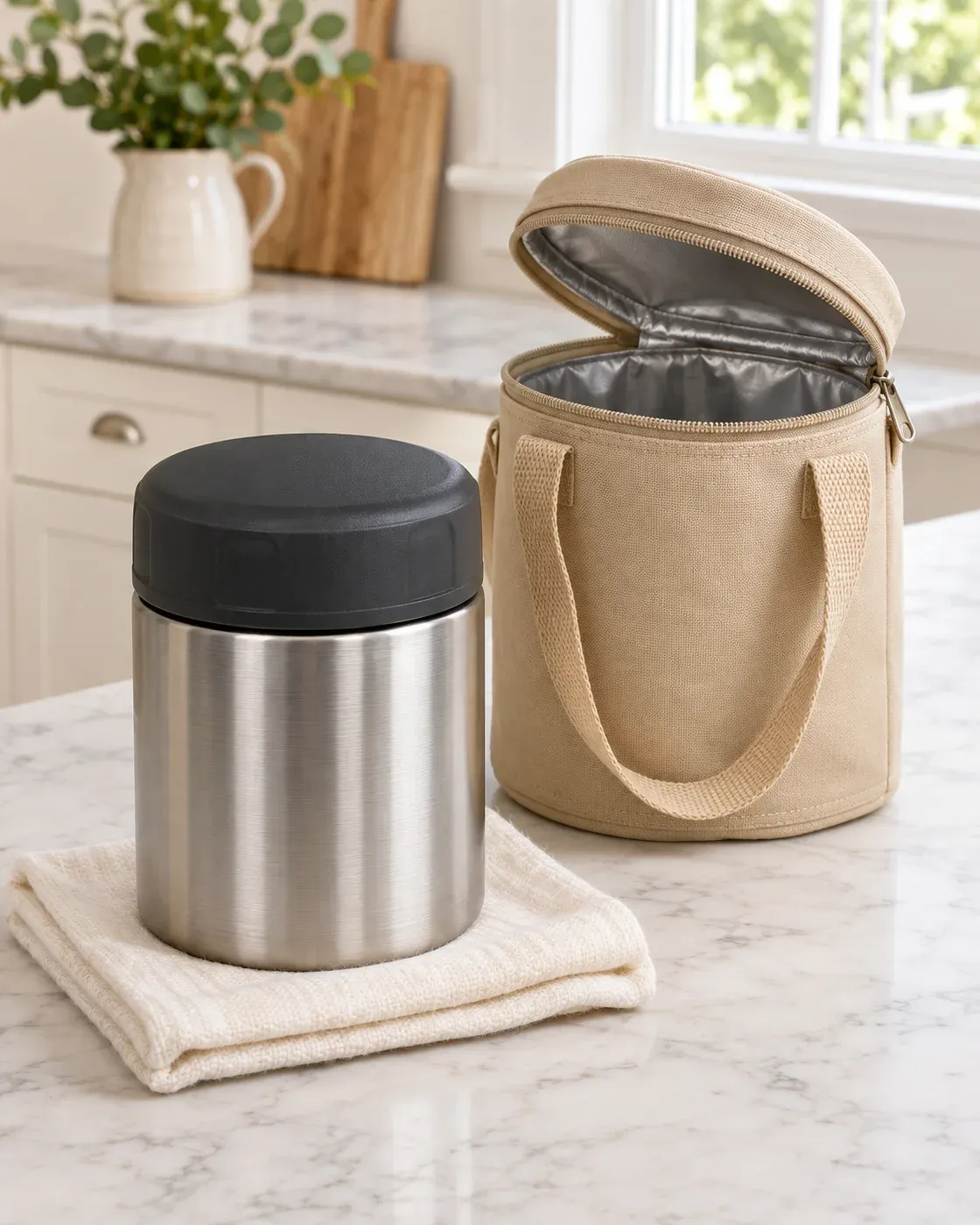
For a short trip, you may carry gravy hot in a clean, food-safe insulated container made for hot food. If its instructions allow, warm the container with hot water, empty and dry it, then add the hot gravy and close it securely. Pack it upright. Check the gravy’s temperature before leaving and on arrival.
The pictured steel jar and carrying bag show equipment, not a measured holding-time test. An insulated container slows cooling but cannot keep gravy hot indefinitely. Its performance depends on the container, amount of gravy, starting temperature, and trip conditions. Do not assume it remains safe for several hours without checking.
If hot gravy drops below 140°F (60°C), use your record of how long it has been without temperature control. If that total is under two hours, promptly reheat it to a boil and 165°F (74°C) throughout before serving. Discard it if it has been without temperature control for two hours or more, or if you cannot tell how long it has been cooling. In conditions above 90°F (32°C), the limit is one hour. These limits follow FoodSafety.gov’s time and temperature guidance; reheating does not reset time that was already spent without safe temperature control.
How Do You Serve Gravy to a Crowd?
Keep the main batch covered in a warmer and put a small amount in a clean gravy boat just before the meal. Bring out another clean boat when needed instead of topping off gravy that has been cooling on the table. Use a clean ladle for the main batch and check its temperature during service.
If the full batch will not fit in your warmer, refrigerate the extra gravy in shallow containers. Reheat each chilled portion separately before adding it to a clean, ready-to-use holding vessel. Do not pour cold gravy into a hot batch.
An ordinary, unheated gravy boat does not maintain a safe temperature by itself. Track its time outside temperature control and replace small portions as needed. For a holiday menu, the sheet pan turkey tenderloin with apples and sage and small-batch sweet potato casserole can be planned alongside the gravy. If you are taking food to another home, see our make-ahead Thanksgiving appetizers guide.
What If the Gravy Gets Thick or Forms a Skin?
Stir thick gravy first. If it still will not pour easily, add warm broth or water a little at a time and whisk until smooth. Check its temperature after the adjustment.
Keep the warmer covered between servings to limit a surface film. If one forms, whisk it into properly held gravy or remove it with a spoon. A skin alone is a texture issue; it does not tell you whether the gravy has stayed at a safe temperature. Use the thermometer and your time record for that decision.
Frequently Asked Questions
How long can gravy sit out during Thanksgiving dinner?
Without safe hot or cold holding, keep track of the total time gravy spends outside temperature control. FoodSafety.gov’s two-hour limit becomes one hour when the surrounding temperature exceeds 90°F (32°C). Keep gravy at 140°F (60°C) or above for a longer serving period.
Can an insulated gravy boat keep gravy hot for hours?
It may slow heat loss, but it cannot replace lost heat. Check the gravy’s temperature rather than relying on a promised number of hours for an untested container.
What is the easiest no-burner method for a large batch?
A suitably sized slow cooker is a practical choice when it holds the gravy at 140°F (60°C) or above. Reheat make-ahead gravy separately before transferring it, then monitor the temperature during dinner.
Choose a warmer that holds the gravy hot, and check it with a thermometer as dinner goes on. You can free up a burner and spend less time juggling pots at the last minute.